Showing posts with label environmental stress. Show all posts

Monday, November 18, 2013

Are Your Tropical Plants Stressed ?

No, I'm not kidding. Your indoor tropical plants are very susceptible to environmental stress.
In all cases, an overall objective, when caring for your plants, should be to to keep their environment on a nice, consistent schedule. We tend live tropical plants in offices and homes. When we start, we tell the client that their plants need 8 consecutive hours of light per day for 5 consecutive days per week. Turn the lights on in the morning when you get into work and turn them off when you leave at the end of the day.
Other important environmental factors - humidity levels should be constant between 30 and 50% relative humidity. Temperature should be constant between 68 and 72 degrees Fahrenheit. Watering - follow the directions as provided by your plant provider (where you bought your plant). If in doubt - contact me at plantsforall@ody.ca
Aim for this kind of environmental consistency and your plants will be happier.
However, far too often lights are turned off when staff go to meetings, lunch, break, etc. Far too often humidity levels drop drastically when heaters are turned way up. Every winter we come across cases where humidity levels have dropped below 15% rh. That is desert conditions. Temperatures are often pushed to 75, 78 or even 80+ degrees. Plants will cook being in those hot and dry environments 24/7. Smarten up - what creates a healthy environment for your plants also creates a healthy environment for your people. These pics show the symptoms of  a single plant under environmental stress. Watch for these signs and make the changes for a happier, healthier environment for your plants and for you.

Plant Information Sheets  - I have created a new Plant Information Sheet for the Dracaena demeriensis Warneckii Ulises, at a customer's request. You can get a copy of this pdf  free by going to our website. Should you have any indoor tropical plants that you would like a Plant Information Sheet, please request it through that same website contact us link   


Friday, November 1, 2013

Linda Speaks Correction

I have told you that Linda will be speaking next at the Salvation Army Heart & Home meeting on Tuesday, November 12, 2013.    I was wrong.
 The right date is this Tuesday, November 5, 2013 at 9:30 am.

Her main talk will be about Norfolk Island Pines - giving & using them at Christmas time and how to care for them. Her discussion will include using mini-lights in your plants. She will also be answering your general plant care questions.

Everyone is welcome and admission is free. This meeting will be held at the Guelph Salvation Army Citadel on Gordon Street. For more information you can contact Linda at Plants For All via phone at 519-767-2161 or email her.

Both Linda and Brian are available to speak at your group functions on a wide range of topics about indoor tropical plants. Email us at plantsforall@ody.ca or call Plants For All at 519-767-2161 to get things started.


Have a great day!
Brian Osmond
Plants For All

Wednesday, October 2, 2013

Post 2013 Orchid Show

The 2013 Orchid Show, produced by the Central Ontario Orchid Society, was held the last weekend of September at the Cambridge Hespeler Arena.  Linda and I attended on the Sunday afternoon and enjoyed the beauty of orchid flowers grown and presented by dedicated orchid experts.
I do not have the time nor interest to devote to take on orchid care as a serious hobby; but I am thankful for those who do and make the effort to present their best for my enjoyment. Every year when I attend this show, I learn something new and that was the case again this time.


Each year I make a point to buy a different variety of orchid from the growers/vendors. I want to learn. This year my fancy was piqued by the Vanda variety. I bought a Vanda 'Robert's Delight' Blue/Black. This first picture shows the orchid I bought. The orchid roots are entwined into a plastic support pot. Back at my shop, I mounted the pot to a wicker tray, as shown in the second photo. This will allow me to support the plant without attaching wires to the plant itself. I secured a wire to the top of the wicker tray and I will suspend the plant amongst some hanging tropical plants in my shop showroom. The Vanda orchid will need daily misting, complete root soak every three days or so, bright light and ambient temperatures that are comfortable to me. It will be fed with a low nitrogen plant food.
With all of these conditions met and a whole lot of luck, I will be rewarded with large blue/black blooms as shown in the third picture.
You can follow along with my success (or failures) as I'll post progress periodically on this blog. Send along your comments and suggestions. If you are in the area, feel welcomed to drop into my shop and see the progress for yourself (Plants For All, 66 Dawson Road, Guelph, Ontario).

Something New (to me) - We also bought an orchid that is primarily grown for it's foliage. Sarcoglottis sceptrodes (Jewel Orchid).  While it does flower, the attention is given to the patterns on its leaves. This orchid is potted into a soil-like potting medium.  I'll post more on this interesting plant complete with pictures at a later time.

When Linda Speaks - Linda gave a talk Tuesday of this week at the Guelph Salvation Army Heart and Home and Home meeting. A good crowd attended and a lot of information was shared. Linda took lots of samples with plants and products and a good time was had by all.  Linda will be speaking again on November 12 to this same group about Norfolk Island Pines, just ahead of Christmas. You may want to plan to attend.
FYI - Linda and I are both available for a limited number of speaking engagements to interested groups.

I have posted lots of beautiful orchid pictures that I took at this year's COOS orchid show. Check them out at our web site.
I will appreciate your comments and any feedback.

Happy growing
Brian Osmond

Tuesday, September 24, 2013

Incoming Bugs & Quick Orchid Notes

Brrr..... it's pretty cool in this part of Ontario, especially for very early fall.  By now, you should be moving the tropical plants that you put outside for the summer, back indoors. At least start to condition them for re-entry into the not-so-great indoors.
     It is very likely that your plants residing in their outdoors summer location have picked up a few residents of their own. Check your plants for bugs and treat them as necessary.
     Last week, we had a customer bring into our shop an overgrown Boston fern and an overgrown Spider plant. Both were in need of dividing, and this is what she wanted us to do. We did this immediately, partly to provide good customer service and partly to get them out of my shop as soon as possible.
     While getting to know these plants intimately, I captured a couple of pill bugs which isn't too hard to do; but I still didn't want them wandering into my shop of healthy, happy, beautiful tropical plants, that are indeed for sale. The planters this customer was using were the self-watering kind and a hiding mosquito emerged from the water reserve well in the pot.
     Neither of these bugs are very threatening to the health of your tropical plants; but the point is  Check Your Incoming Plants for Bugs. If these bugs had have been spider mites, mealy bugs, fungas gnats or scale, the result could have been much more severe. Left undetected in September or October, these pests would have multiplied many times over by January and February when they would finally be discovered, everywhere.
     We sell more insecticide products in February than any other month. So, Check Your Incoming Plants for Bugs!


Quick Orchid Notes : The  2013 Orchid Show and Sale is presented by the Central Ontario Orchid Society this coming weekend Saturday, Sept 28 and Sunday, Sept 29 in Cambridge, Ontario. For more information, visit their website at www.coos.ca   
There are thousands of different types of orchids, so a very hard

question to easily answer is "How do you care for an orchid?"  The 7 major types of orchids available for consumer sales are Phalaenopsis, Cattleya, Oncidium, Dendribium Phalaenopsis, Cymbidium, Paphiopedilum and Vanda. Wherever you buy your orchid, ask the seller to identify the type and tell you how to care for it.
The type of orchid most commonly sold is the Phalaenopsis, These plants with the magnificent, large, long-lasting, coloured blooms grow well in average home temperatures and light conditions. These are an excellent orchid for beginners to grow. Phalaenopsis ( the Moth Orchid) account for more than 75% of all orchids sold.
  1. The roots should be slightly damp all of the time; but not allowed to sit in water.
  2. They thrive in humid conditions - 50% or higher.
  3. Average nighttime temperature of 65 degrees F. Daytime 70 degrees F.
  4. Low to medium light.
  5. Should be repotted every 1-3 years with a porous potting material.
  6. Fertilize regularly during blooming periods.
"How do you care for an orchid?" These are just a few quick notes about the Phalaenopsis orchid to give you an idea of the care required. Other types of orchids may require different care, so, wherever you buy your orchid, ask the seller to identify the type and tell you how to care for it.

One Last Thought - What is the most important factor that you should consider when purchasing a new tropical plant for your home? Linda will be addressing that at her talk on October 1 at the Salvation Army Heart & Home meeting. I would like to know your thoughts. Please send a comment in the space below.

Wednesday, September 18, 2013

Bonsai - Not for Everyone

When September takes hold and people get secure into their routines again, the interest in Bonsai increases. But I will be the first to tell you that Bonsai are not for everyone (even though I sell them).

Bonsai is not a specific type of plant; but rather a way to grow a plant. Bonsai is growing a plant in miniature. Everything is  smaller - roots, stems, trunks and leaves.
 When maintaining your regular houseplants, they always do better when all parts of the plant are in balance and you provide the essentials of life. This is very much the case with Bonsai.

 If you have ever maintained tropical fish, the same principle holds true. Because the volume in a 1 gallon goldfish bowl housing 2 or 3 shimmering beauties is low compared to a 125 gallon show tank with 20 or 30 specimen fish, the balance in the bowl is more easily upset, causing stress to the inhabitants. You have to be more vigilant in maintaining the balance. It isn't harder or even more work than maintaining the 125 gallon tank; but it is more frequent work.
 The same is true for Bonsai. Neglect them and they will not be
happy. So, before you buy a bonsai for yourself or as a gift consider these points:
  • be prepared to mist your bonsai daily
  • the roots must be slightly damp all of the time
  • water gently and thoroughly
  • feed them regularly with the right strength of fertilizer
  • should your Bonsai need a winterizing regime, learn that and don't ignore that
Bonsai are a very interesting plant form hobby. After the hobby they become an art. They can be old, they can be young. They can be shaped. They are  something of which you can be proud. They are not hard to grow; BUT they do need frequent attention.
Interested? I have posted a downloadable pdf of Bonsai FAQs at our website. Check it out.
 If you want to give Bonsai a try we can help get you started. All of our Bonsai are beautiful, hardy and priced to get you affordably into the art of Bonsai.


Orchid Show:    COOS  (Central Ontario Orchid Society) is presenting its annual Orchid Show & Sale on Saturday Sept. 28 and Sunday Sept. 29 at the Cambridge Hespeler Arena. We have a very limited supply of $1 Off coupons for show admission, so pop into the Plants For All store at 66 Dawson Road in Guelph to get yours.  For more Orchid Show info go to COOS.ca


Monday, September 16, 2013

Getting Back Into Your Green Groove

It is still summer; but the weather often tells a different story. In our area of Ontario the temperature will drop to 1 degree Celsius tonight.  Be that as it may, the calendar doesn't lie.
The students are back in school and the vacations are mostly over.  Part of getting back into the routines of personal and family life is getting back into your green groove:
  • plants that you have placed outside for the summer should be conditioned for coming back inside
  • evaluation of your houseplant collection should be made to cull out the weak or spent plants and determine what new plants should go where
  • educate yourself about what plants will benefit your home life and how to care for them and provide the environment they need.
  • Spathyphillum "Peace Lily"
  • check your supply of plant care products -food, fertilizer, leafshine, insecticides, pots, potting mix
We will be addressing these subjects over the next little while but for now just think about making living green 
a part of your life and the life of your family.  I recently read that houseplants, regardless of how simple, are evidence of a life being in that place.  Make your home your own and get back into your green groove.

Coming Up : 
Linda will be presenting 2 different talks at the Heart & Home meetings at the Salvation Army in Guelph. The meetings start at 9:30 am and the Salvation Army is located 1320 Gordon Street in Guelph. Everyone is welcome to attend, so feel free to just show up or if you would like more information, call Linda at Plants For All (519) 767-2161 or via email plantsforall@ody.ca  
    Tuesday, October 1 : Caring for Houseplants 
    Tuesday, November 12 : Giving a Living Gift for Christmas - the Norfolk Island Pine

Closer to Now :   COOS  (Central Ontario Orchid Society) is presenting its annual Orchid Show & Sale on Saturday Sept. 28 and Sunday Sept. 29 at the Cambridge Hespeler Arena. We have a very limited supply of $1 Off coupons for show admission, so pop into the Plants For All store at 66 Dawson Road in Guelph to get yours.  For more Orchid Show info go to COOS.ca 

And One More Thing :  We now have an excellent selection of bonsai in store.
Lots of sizes, varieties and good price points. You can see pics, sizes, prices  and more information at our web site.


Wednesday, May 8, 2013

Spring has Come

Few things in life that affect everyone are as unpredictable as Mother Nature. I can also suggest that nothing is more predictable. Spring has come.
Here in Southern Ontario, Mother Nature has presented us with ideal Spring weather for the past several days, with no end in the immediate future.
With this glorious weather, our thoughts are turning to putting plants outside. Many of your live tropical plants will benefit from the natural sunlight and daylight as well as the fresh air and breezes.
A few things to remember-
  • we may still get some cold nights, so provide sheltered areas for your plants and have an emergency plan in place, in case you need to bring them back inside in a hurry.
  • gradually expose them to the full sun exposure. Being inside all winter, your plants will have become accustomed to lower light conditions. Too much sun too soon will burn the leaves and cause a set back for the plants.
  • plants outside that are exposed to more light, more air movement (breezes) and warmer temperatures will require more water and more often. Check your plants daily and adjust your watering accordingly.
  • I am not a fan of the slow release fertilizers that are available on the market. Instead, use a water soluble fertilizer. You will get better nutrient application control.
Your tropical plants, whether inside or outside, require light, water and nutrients. The amount of everything has changed with the move to outdoors, so you will want to make the necessary adjustments. We'll chat some more.

Since we last chatted on this blog, I have made lots of changes to our web site. Amongst other things, you can now see pictures of most of the live tropical plants that we have in stock for sale. This page changes as plants are sold and as more plants come in from the greenhouse, so check it out often. We are getting very positive reaction as more and more consumers are 'finding' us because of our web site and your feedback will really be appreciated.

" Talk to the Owners"
When the store is open, Linda and/or Brian is always there, on-site. Whether you come in, phone or email, you are talking to the owners of Plants For All.

We know our business and we know indoor tropical plants and we love to talk to people who love plants.

So, if you have any questions, want to share a plant success story or are looking for something special - call us and
 Talk to the Owners.


Friday, March 8, 2013

Plants For All

Plants For All: Plants For All has been providing professional interior, tropical plants, plant care services,...

Wednesday, December 19, 2012

Don't Get Bugged Over Christmas Plants

Welcome back. This is a Christmas topic you may not find discussed anywhere else but here. It can be very important. Insect pests in your Christmas plants. Generally, your houseplants are pestered by only 6 or 7 types of insects. Of this small number, one in particular makes a sudden appearance this time of year - during the Christmas season.
plantsforallblog, fungas gnat
Fungas Gnat
     The fungus gnat (when outside the home they are called mushroom flies) is a soil borne plant pest that can be laying in hiding in your new plant's potting soil just waiting to erupt into a cloud of nuisance. They will come into your home in the potting mix of a new plant. They may come in as eggs waiting between the pot and the soil. They may come in as hatched larva crawling around within the top inch or so of the potting soil. They may be in your potting mix in the pupa stage. They may come in as fully developed flies, as seen here. They may come in as all 4 stages at the same time.
     Because most Christmas plants are grown so quickly and in large  numbers in the greenhouses, they are more susceptible to disease and insect infestation. It is easy for a few (or a lot) of plants to escape the growers' efforts to control problems. The fungus gnat fly will stay close to the plants. The fly itself is not only annoying but will lay more eggs. Herein lies the real danger. They will quickly infest any nearby houseplants. If left undetected and untreated, fungus gnats will soon be in all of your plants. It is the larva living in the top inch or so of the soil that causes the damage to your plants by eating away at the plants' fine root hairs. Slowly but surely your plants will begin to suffer.
     So look for this pest. Check the foliage area for the fly and lightly cultivate/disturb the top inch of soil looking for more flies and larvae. Should you find any, quickly quarantine the infected plant(s) from the rest of your plants.  The fungus gnat looks very similar to a fruit fly but it will be smaller and darker and they fly very fast. Should you find them, you can
  • quarantine the plant until after Christmas
  • discard the plant
  • install yellow sticky traps to catch flies and measure the extent of the problem
  • repot the plant with complete new soilless potting mix
  • treat the plant with the right insecticide.
     At Plants For All, we are licensed by the Ontario Ministry of the Environment to sell Class 6 and 7 insecticides. We can help. Well, that turned out to be more information than I initially anticipated. If it was too long, let me know. I appreciate all of the feed back.
   

Plants For All retail store at 
  66 Dawson Road in Guelph will now be open Saturdays until Christmas from 11am to 3 pm.


 Exclusive Save 15% Blog Offer - Plants For All is a small independent plant shop and we would like a chance at your tropical plant-buying business. From now through to Christmas, I'll be updating this blog frequently to discuss Christmas plant topics and feature some of our products. When you come into our store, mention this exclusive blog offer and receive 15% off of your entire purchase - now through to Christmas.  We would love to see you.

Here is a quick peek - Christmas at Plants For All. Check out this short video. I will be in the store this Saturday, December 22 from 11am to 3pm. I would love for you to come and visit. Directions are here. 


One Last Thing - I have been venturing more into the Twittersphere lately and I am enjoying the conversations and wide range of topics. Please join me to get the frequent updates and valuable info from like-minded followers. Find me at www.twitter.com/BrianOsmond1

 As always, your comments and criticism will be appreciated.

Have a joyous holiday and Merry Christmas to all.

Brian Osmond  

Plants For All 


Friday, December 7, 2012

Continued - Christmas 2012 at Plants For All

Another day and lots more stuff. How is your preparation for the Christmas season coming along? You still have lots of time - don't you?
Before getting on with it, I was advised of a couple of points to make about the last post -
plantsforallblog Anthurium
Anthurium - Christmas Plant?
  1. when talking about Poinsettias, I mentioned a few other plants that want to be considered 'Christmas plants'.  I should have added the Anthurium. With their blazing red flowers, they can attract the eye of the Christmas colour conscious consumer. We have Anthuriums in stock in 4" and 6" pot sizes.
  2. Under One of Our Favourites section, I was telling you that our Atlantean products, Specialty Fertilizer Concentrate is mixed at the rate of 7 drops per litre of water. I should have mentioned that to make measuring easier and messless (I think I just created a new word) we include a special flip-top cap that can dispense the concentrate one drop at a time. 
plantsforallblo, Rosemary
Rosemary Cone form - 6" pot
Rosemary (Rosmarinus officinalis) is another plant that gains popularity at this time of year. It is quite simply my most favourite herb. Besides its many culinary, medicinal and cosmetic uses, Rosemary is a symbol of friendship, loyalty and remembrance. A sprig of Rosemary is often carried by mourners at funerals and the bride at her wedding. Greek scholars wore garlands or sprigs of Rosemary when sitting their exams to improve their memory and concentration.
plantsforallblog
Rosemary 4" pot
     When my grandchildren were younger, I would add ground dried Rosemary leaves to scrambled eggs to offer them green eggs (refer to Dr.Seuss - Green Eggs and Ham); both delicious and fun.
     Rosemary are very hardy to grow indoors year round or to plant outside in the Spring. It will not tolerate our cold. Treat it to bright light, warm temperatures and not too wet.  
    Rosemary is only available at certain times of the year and we have it now in the 2 sizes pictured here at $4 for the 4" pot and $35 for the big Cone form. Come in for a smell - excellent.

Plants For All retail store at 
  66 Dawson Road in Guelph will now be open Saturdays until Christmas from 11am to 3 pm. 

Exclusive Save 15% Blog Offer - Plants For All is a small independent plant shop and we would like a chance at your tropical plant-buying business. From now through to Christmas, I'll be updating this blog frequently to discuss Christmas plant topics and feature some of our products. When you come into our store, mention this exclusive blog offer and receive 15% off of your entire purchase - now through to Christmas.  We would love to see you.

plantsforall blog
Spring Leafshine
  One of Our Favourites - whether it's plants going into our office maintenance accounts or a plant going home with you from our retail store, we want that plant to shine. We sell a few different kinds of leafshine; but our favourite to use is Spring Leafshine. We sell one size - the big 600ml aerosol spray can. The propellant is Ozone Safe. Just spray your foliage plants lightly and that's it. No need to wipe off. I can clean a 6' ficus benjamina in less than a minute. Clean the plants in your home now for just $17.25 per can.
Come in for a demonstration and pick up a can of Spring Leafshine

One Last Thing - the 2013 Goldbook telephone directory was distributed today. Check out our ad under "Plants-Indoor-Retail & Maintenance" , we're the only ones listed. It is on page 150. The ad includes a handy QR code that you can scan with your smart phone to get quick contact information about Plants For All. You can also jump to the ad on our Goldbook web page here. Please let me know what you think of this QR code feature. Thanks.


Until next time, keep the Christmas Spirit.

Brian Osmond


Thursday, December 6, 2012

Christmas 2012 at Plants For All

Christmas at Plants For All
Plants For All store is ready
We are getting geared up in the store for the Christmas season. 
     Linda has done a fantastic job of filling the store with the reds and greens. OK - a lot of green was already here because of all of our tropical plants.  We have a nice selection of poinsettias, tropical plants, bonsai, air plants, baskets, plant foods & fertilizers, leaf shine, insecticides, pots, artificial trees, bushes and stems and on and on.....
     One thing that sets Plants For All retail store apart is the personal attention that you will receive because we are a small independent plant shop and we'll make everyone of your custom plant arrangements uniquely yours..
     I said that we are getting geared up. That's because we won't be done until Christmas. Things are always changing - we keep adding new items. So, do stop in often to see what's going on.

Plants For All Euphorbia pulcherrima
Poinsettia Standard Red
The Poinsettia (Euphorbia pulcherrima) is the king of Christmas plants, and solid red is still by far the favourite colour. Each year some other plant comes onto the scene to try and make a claim at being the Christmas plant - Christmas cactus, cyclamens, assorted ferns, violets; but the Poinsettia is the Christmas plant. Also each year, the topic of Poinsettia toxicity comes to the forefront.  Poinsettia are not poisonous. However, you should discourage your child or pet from eating any of your plants because the plants are fibrous and could easily become a choking hazard. Furthermore, being a Euphorbia, the poinsettia, when a stem or leaf is broken, will 'bleed' a white sap that many people do find irritating. (Check out the 'Plant Toxicity' page at the top of this blog for a bit of common sense on this subject).
    The Poinsettia has an overall rating of 5.1 (out of 10)in the EcoFriendly House Plants book by B.C Wolverton. Ratings are based on a plant's comparative analysis regarding the removal of chemical vapours, ease of growth and maintenance, resistance to insect infestation and transpiration rate.

Exclusive Save 15% Blog Offer - As I noted above, Plants For All is a small independent plant shop and we would like a chance at your tropical plant-buying business. From now through to Christmas, I'll be updating this blog frequently to discuss Christmas plant topics and feature some of our products. When you come into our store, mention this exclusive blog offer and receive 15% off of your entire purchase - now through to Christmas.  We would love to see you.
   
Seaweed Plants For All
Specialty Fertilizer Concentrate
One of Our Favourites - The main part of the Plants For All business is our contract maintenance of live tropical plants in offices. What, when and how we feed and fertilize our clients' plants is very, very important. You can download a free pdf of the Nutrient Application that we use by going to www.plantsforall.ca/information-downloads.php   One of Our Favourites is the Atlantean products, Specialty Fertilizer Concentrate. This product contains molasses, calcium, seaweed, phosphorus and vitamin C. We mix just 7 drops per litre of water and water it into our plants. Download the aforementioned pdf for application details. We carry 2 sizes in our store - 300g bottle for $10 and a 1.1kg bottle for $20. Check it out.

That's it for now. As always, I would welcome your feedback and/or questions. Check the Contact Us page at the top of this blog and we would love to see you in the store.


Thursday, July 26, 2012

Putting Your Tropical Plants Outside - Part 5 - Trimming & Pruning

     Before getting to the subject of the day, I would like to acknowledge a very favourable comment received after the last post.  Thank you so much.  The feedback is certainly encouraging.  If you would like to comment please do so at the end of this post.

     Most of your indoor tropical plants will benefit from spending the spring, summer and early fall outside, and by now, you may already have set them out. Here are some guidelines and things to consider to ensure their time is beneficial and well spent for both the plants and you.
     
     By this time your plants are well positioned outside. They are being watered and fed and fertilized properly and growing until they are as happy as you think they can be. But what should happen to all of that new growth? Trim and prune.


     Trimming is the minor cutting off of damaged plant material and shaping of the plant's foliage. Pruning is the major cutting of limbs and branches and stems and, failing some catastrophic physical incident, is usually reserved until preparing the plant for coming back inside in the fall.


    I find that trimming a plant is one of the most satisfying of all maintenance that is required to tend your plants. It is also the hardest one for beginners to grasp. You have a hands-on direct influence in the physical strength, appearance and health of your plant. A good trimming job will improve the quality of your plants and increase your own personal satisfaction. A poor trimming job, while it won't enhance either the plant nor your self-esteem, will most likely grow out so you can try again. Go slow and practice.

    Always use sharp scissors or shears, depending upon the thickness of the plant material being trimmed.  I will trim primarily to remove damaged material or to shape the plant. Damaged material may be leaves that have brown edges due to low humidity, leaves that have been torn or eaten by animals/pests and branches that have been broken by wind or birds or you.

     When trimming leaves with damaged edges, I will trim off just the damaged area because if the rest of the leaf is still healthy, it is producing food for the plant.  Trim the leaf to the same shape as a perfect leaf. If your leaf should be pointed, then trim that way. If your leaf should be rounded, then trim that way.  Perfect leaves do not have their ends cut flat, straight across. Don't do it. With a little practice, you can shape the leaves well enough so as to avoid detection by others. Yes, you can. I know. It is very satisfying and your plant will look and be healthier. So trim out all damaged material as it appears.

     Trimming to shape the plant is a lot easier than you may think. I will share my secret with you shortly.  By now, I expect your plants are showing lots of new growth. While we want to encourage new growth, it would be a mistake to let the plant go wild and crazy. Trimming back new growth will keep the inside of your plant fuller and encourage strengthening of the inner trunks and stems.

How to Trim for Shape: I want the plant to grow; but I restrict how much it grows and how fast. Stand back and look at your plant.  Draw an imaginary profile around your plant and in the shape that you want your plant to be.  All plant material that 'pokes' outside of that profile comes off with your sharp scissors or shears. The first couple of times that you trim for shape, you will likely have a few holes where your profile is not filled out. That's OK. Trim for shape at least once a week and more often if you like. Remember just cut off the material that 'pokes' outside of that profile. The plant is going to try to regrow from where you cut it; but be strong and determined. Trimming will encourage new growth from the inner sections of the plant.


     While you are getting so close and personal and hands-on with your plant, this is a good time to keep a watchful eye for insect problems. The earlier that we can detect an insect issue, the easier it will be to resolve that issue. I will be getting into insect problems in more detail as fall arrives; but if you have an issue to discuss, get in touch with me by commenting at the end of this post or email me at plantsforall@ody.ca 


Topsy-Turvy Update: Remember the tomato plant that we planted in the upside down (Topsy-Turvy) planter at the trailer. Well, it is doing quite well as you can see in this recent update picture.  We have a small cluster of flowers and the plant itself is strong and full. We have pulled off several suckers.  I'll keep you up to date.


Foliage for Clean Air Council - Plants For All was one of the original Charter Sponsors of the Foliage for Clean Air Council many years ago and we have been strong advocates of the benefits of using tropical plants to clean the air we breathe inside of our homes and offices. This group has since morphed into several different offshoots; but the message is still the same.  Recently, the work of Dr. Wolverton and his NASA research in this field has gained a higher profile and awareness.  We have had more people coming in to buy plants on his preferred plants listPlants For All has a lot of information from Dr. Wolverton's findings and over 30 years of our own experience in the tropical plants in offices business. I have been asked to post on this blog about this subject. So stay tuned for lots of information and comment. I will take a break from this series of posts on  Putting Your Tropical Plants Outside until the fall, when I will address the important topics of insects and preparing your plants to come back inside.

 And one more thing ....

    We have posted a new web page featured plant on our web page at http://www.plantsforall.ca/featured-plant.php . We are offering a beautiful Schefflerra Amate floorplant with a regular price of $50 for just $30 until Monday, August 13, 2012. This is an incredible value. Click on the web page link for more detail.


This is a substantial 4-5 feet tall with 3 plants in a 10" pot. This is one of the plants studied in Dr. Wolverton's research.


Thursday, July 5, 2012

Putting Your Tropical Plants Outside - Part 4 - Fertilizing and Feeding


     Most of your indoor tropical plants will benefit from spending the spring, summer and early fall outside, and by now, you may already have set them out. Here are some guidelines and things to consider to ensure their time is beneficial and well spent for both the plants and you.
 
      From discussions in the previous posts, you now know that the interior tropical plants that you have set outside are getting more light and more water and more frequent watering. They want to grow. Essential to good, healthy growth is the application of nutrients. You will want to feed your plants. I differentiate between fertilizing and feeding.


      Fertilizing is the application of a product with significant content of the 3 main nutrients – nitrogen, phosphorous and potassium. To fertilize foliage tropical plants we use and recommend Plant Prod 15-15-18. To fertilize flowering tropical plants we use and recommend Plant Prod 15-30-15.

      Feeding is the application of a product with much lower content of the 3 main nutrients. We use and recommend Atlantean Products Specialty Fertilizer Original Blend. Part of the blend is seaweed that contains 59 trace elements that are beneficial to your plants and not included in the chemical fertilizers. The nitrogen, phosphorous and potassium are present at the rate of 2-1-1.

      When tending the tropical plants indoors, we fertilizer at ¼ the recommended rate, once a month. Every other time that the plant needs watering we feed at the rate of 7 drops per litre of water. It may sound more complicated than it actually is. (In fact, you can download a pdf that I created to more fully explain our application procedures and the products that we use right here and click on the Nutrient Application pdf.)  Note: Do not use both products at the same watering.

      Now, back to your plants that you have put outside. Follow a similar application procedure as for indoors. The difference will be that because you are watering more, the fertilizing and feeding that the plants actually receive will also be more. Set up a fertilizing/feeding cycle – one time you will fertilize and the next three times you will feed. Then start your cycle again and continue. Do not increase the rate of fertilizer nor feed that you mix. If you apply too strong of a fertilizer, you will risk burning and stressing your plant. (You cannot apply too much of the Atlantean Products Specialty Fertilizer Original Blend; however, the plant will only use what it needs and the rest of the nutrients and trace elements will just be wasted.)

      So let me know what is going on with your tropical plants that you have put outside for the summer. Next post, we will continue this series with a discussion about trimming and pruning.

Palm Update
New Growth
In a post dated June 7, I showed you a picture of my Neanthe bella palm that I had planted  outside at the trailer. It was showing signs of sunburn and stress. As we have since discussed, the palm is recovering nicely, as shown in this more recent pic. The overhanging trees have filled in to provide a nice shade canopy to reduce the amount of direct sunlight hitting the palm.  I am encouraged by the new growth.

Angel's Trumpet 
We put 3 Angel's Trumpet plants up at the trailer a couple of weeks ago. This week, one has presented us with the first of many, I hope, magnificent blooms. This bloom is 7 inches wide and 13.5 inches long. The flower closes somewhat during the day and has almost no fragrance. But at night the bloom opens completely and sends out a very strong and very pleasant fragrance. When the breeze blows I can easily enjoy the smell from my seat on the deck. Very special indeed and I'm looking forward to many more.

 And one more thing ....

    We have posted a new web page featured plant on our web page at http://www.plantsforall.ca/featured-plant.php . We are offering all of our artificial ferns at 40% off until Monday, July 23.

 
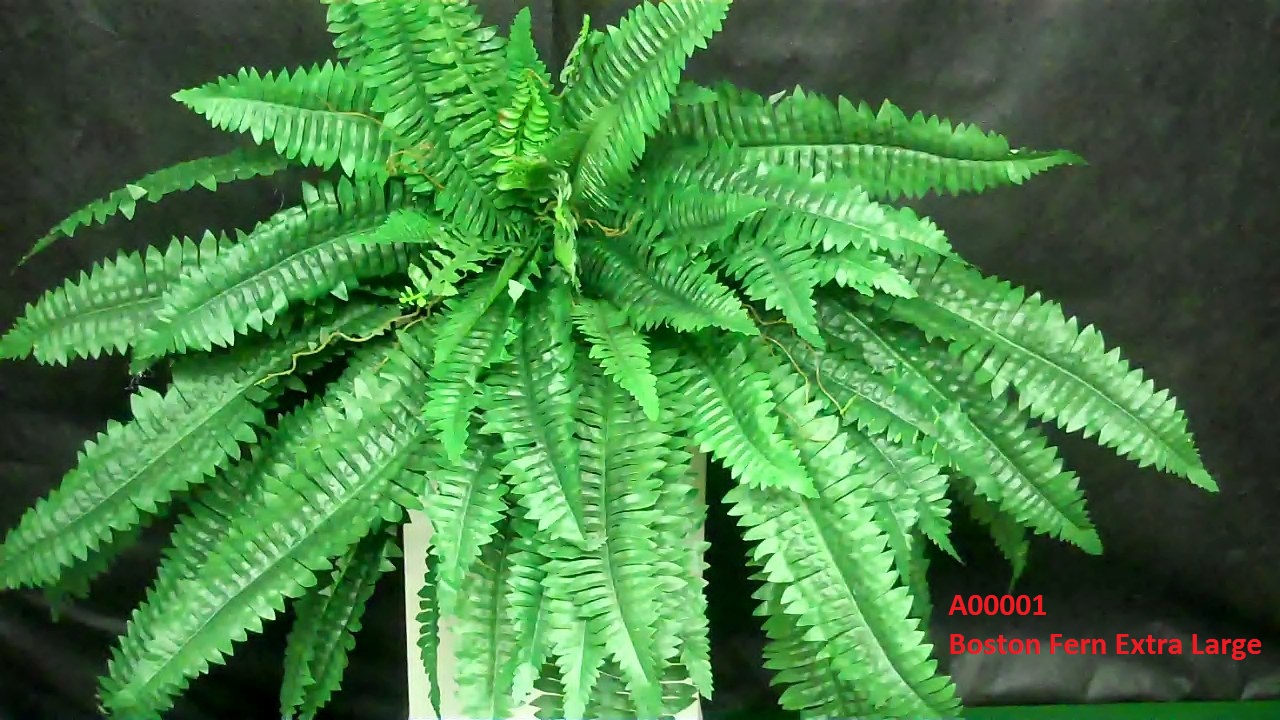
     Things are quieter during the summer months, so we want to shake things up a bit by offering to you exceptional savings on all of our in-stock artificial ferns. We have Boston Fern bushes in small, medium, large and extra large. We have also included Asparagus (Springerii) Fern Bushes and Spray, Maiden Hair Fern Stems and Leather Fern Stems - all at 40% off.


Monday, June 18, 2012

Putting Your Tropical Plants Outside - Part 3 - Change of Watering Part 2 of 2


Most of your indoor tropical plants will benefit from spending the spring, summer and early fall outside, and by now, you may already have set them out. Here are some guidelines and things to consider to ensure their time is beneficial and well spent for both the plants and you.

Previously, we covered how increases in light intensity and duration necessitates changes to frequency and amount to water. There are other factors that will impact your watering regimen for your indoor tropical plants when you have set them outside.

The outside environment is much more variable than the indoor environment. Blowing wind, whether gusting gales or gentle breezes will dry your plants out and the speed by which the plants will dry out is in direct relationship to the strength and duration of those blowing winds.

Changes in outdoor temperatures will change how quickly your plant takes up water. Consistently warm temperatures will cause the plant to use a lot of water. A sudden drop in temperature will cause the plants uptake of water to be reduced. If the temperature drop is severe enough, it may cause the plant to stop taking up water altogether. This will just be temporary until the plant has adapted to its environmental changes; but be aware of these changes and do not water when your plant does not need it.

The dog days of summer are characterized by searing temperatures and often accompanied by low humidity. When humidity is low, much of the plants moisture is lost through its leaves. Be extra vigilant during these times. Low humidity does not directly translate into dry plants. Adding more water to a pot that is already wet will not solve a low humidity condition. Misting or spraying the plant with water and seaweed will certainly help.

While all of these factors will cause your plant to lose or use more water, remember the rain. Depending on where you have positioned your plant it may be exposed to receiving a lot or a little rain water. After a good rain you may be able to avoid watering for a while. Be sure to check.

What can you do?  As discussed in the last post, water the plant when it needs it and give it the amount of water needed to bring it back to its ideal moisture condition. If you need more detail on that discussion, feel free to check back to the last post.

Heed your local weather reports. Be aware of temperatures, humidity, when rain or drought is expected and water your plants accordingly.

Next time we will address some nutritional requirements when putting your indoor tropical plants outside.

  And one more thing ....

We have posted a new web page featured plant on our web page at http://www.plantsforall.ca . We are offering a Kalanchoe blossfeldiana (Flaming Katy)   for $8.85 with a regular price of $12.25, plus a Free extra Bonus.  
 
    
Average temperatures – Bright light
Water thoroughly & let surface dry between waterings

     Go to our web page “Featured Plant” page for a free information pdf download.
      Check it out on the "Featured Plant" page of our web site. That offer expires Wednesday, July 4, 2012.